
Tiềm năng cung cấp nguyên liệu của Việt Nam cho sản xuất nhiên liệu hàng không bền vững HVO/SAF
Tóm tắt
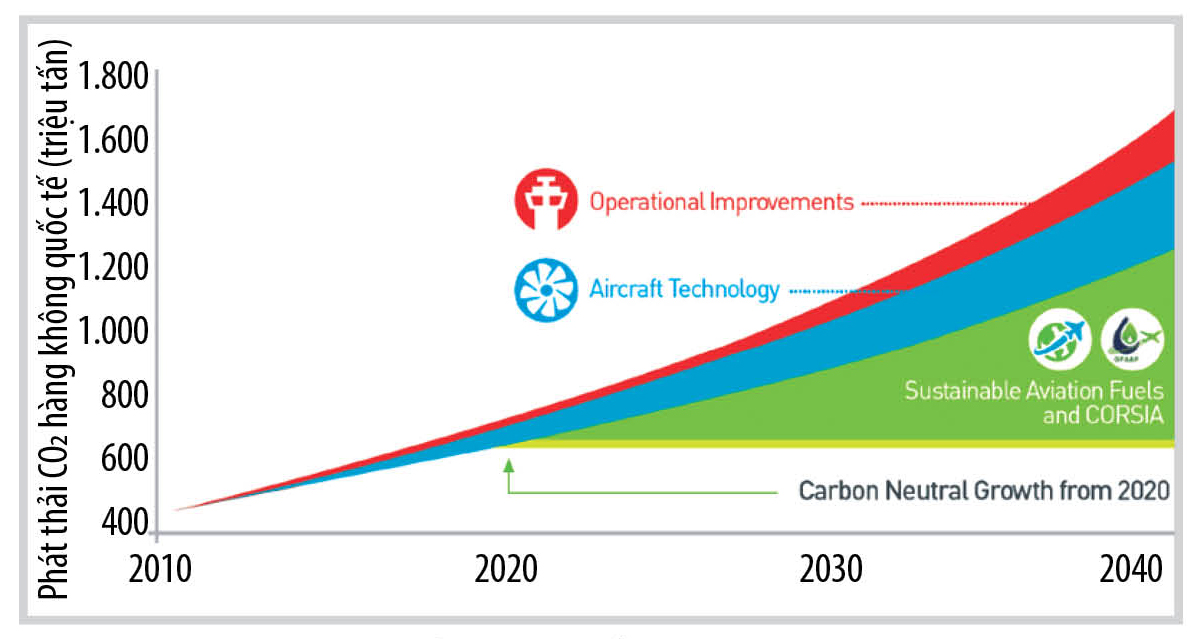
Tổ chức Hàng không Dân dụng Quốc tế (ICAO) đang thúc đẩy sử dụng nhiên liệu hàng không bền vững (SAF) để giảm khí thải CO2, thông qua Chương trình bù đắp và giảm thiểu carbon của hàng không quốc tế (CORSIA) với mục tiêu bắt đầu giảm phát thải từ năm 2027. Trong số các công nghệ sản xuất SAF, HVO (tinh chế dầu thực vật, dầu thải, mỡ bằng quá trình hydrodeoxy hóa) đã được thương mại hóa trên toàn thế giới vì sử dụng nguyên liệu là các phụ phẩm, giúp giảm 80% lượng khí CO2 mà không làm thay đổi mục đích sử dụng đất để trồng cây nguyên liệu.
Việt Nam có tiềm năng lớn trong việc cung cấp nguyên liệu bền vững cho sản xuất SAF, chủ yếu từ mỡ cá - phụ phẩm xuất khẩu cá tra và dầu ăn đã qua sử dụng (UCO) – phụ phẩm chế biến thực phẩm, đặc biệt nếu áp dụng các biện pháp để tăng hiệu quả thu gom. Trong năm 2023, Việt Nam đã xuất khẩu khoảng 120.000 tấn mỡ cá và 50.000 tấn dầu ăn đã qua sử dụng cho các doanh nghiệp sản xuất SAF như Neste và Diamond Green Diesel. Bài báo giới thiệu các công nghệ sản xuất SAF và phân tích các yếu tố cho thấy tiềm năng cung cấp nguyên liệu của Việt Nam cho thị trường quốc tế để sản xuất nhiên liệu hàng không bền vững bằng công nghệ HVO.
Các tài liệu tham khảo
ICAO Secretariat, “Introduction to the ICAO basket of measures to mitigate climate change, Chapter IV: Climate change mitigation: Technology and operations”. [Online]. Available: https://www.icao.int/environmentalprotection/Documents/EnvironmentalReports/2019/ENVReport2019_pg111-115.pdf.
ICAO Environment, “CORSIA States for Chapter 3 State Pairs”, 2024. [Online]. Available: https://www.icao.int/environmental-protection/corsia/pages/state-pairs.aspx.
European Union, “Regulation (EU) 2023/2405 of the European Parliament and of the Council of 18 October 2023 on ensuring a level playing field for sustainable air transport”, 2023. [Online]. Available: https://eur-lex.europa.eu/legal-content/EN/TXT/PDF/?uri=OJ:L_202302405.
KPMG, “Is Asia Pacific a game changer for the global SAF industry?” 2023. [Online]. Available: https://assets.kpmg.com/content/dam/kpmg/sg/pdf/2024/05/is-asia-pacific-a-game-changer-for-the-global-saf-Industry.pdf.
U.S Department of Energy, “Alternative fuels data center”, 2024. [Online]. Available: https://afdc.energy.gov/fuels/sustainable-aviation-fuel.
World Economic Forum, “Dataset adapted from “Clean skies for tomorrow”".
Alba Canovas, Alex Ehrenhaus, Arianna Baldo, Carina Wessels, Carolina Grassi, Mariana Tracastro, Onofre Andrade, Otavio Cavalett, Pratima Gangopadhyay, Robert Boyd, and Sharmine Tan, “Sustainable feedstock assessment for sustainable aviation fuel production in Southeast ASEAN”, The Roundtable on Sustainable Biomaterials, 2024.
GREENEA, “New players join the HVO game”. [Online]. Available: https://greenea.com/en/publication/new-players-join-the-hvo-game/.
GREENEA, Horizone 2030, “Which investments will see the light in the biofuel industry?”, 2021. [Online]. Available: https://www.greenea.com/wp-content/uploads/2021/01/Greenea-Horizon-2030-Whichinvestments-will-see-the-light-in-the-biofuel-industry-1.pdf.
Hydrocarbon Processing, “Scaling up SAF production with Fischer Tropsch technology”, 2024. [Online]. Available: https://www.hydrocarbonprocessing.com/news/2024/04/scaling-up-saf-production-withfischer-tropsch-technology.
SAF Inverstor, “Project: LanzaJet freedom pines, georgia, USA”, 2022. [Online]. Available: https://www.safinvestor.com/project/141923/lanzajet-freedom-pinesgeorgia-usa/.
Jane O’Malley, Nikita Pavlenko, and Yi Hyun Kim, “Meeting the SAF grand challenge: Current and future measures to increase U.S. Sustainable aviation fuel production capacity”, International Council on Clean Transportation, 2023.
Nikita Pavlenko, Stephanie Searle, and Adam Christensen, “The cost of supporting alternative jet fuels in the Eupean Union”, International Council on Clean Transportation, 2019.
Amsterdam-Rotterdam-Antwerp, “Argus biofuels daily international market prices and commentary”, 2023.
Gain, USDA, “Biofuels annual”, 2023.
S&P Global, “Demand heats up for Asia’s used cooking oil, 2022”. [Online]. Available: https://www.spglobal.com/commodityinsights/en/market-insights/blogs/agriculture/072922-sustainable-aviation-fuelused-cooking-oil-uco-methyl-ester.
S&P Global, “Global UCO supply to double by 2030 as US, EU policies drive Asian supply”, 2023. [Online]. Available: https://www.spglobal.com/commodityinsights/en/market-insights/latest-news/agriculture/100423-global-uco-supply-to-double-by-2030-as-us-eu-policies-drive-asian-supply.
Anouk van Grinsven, Emiel van den Toorn, Reinier van der Veen, and Bettina Kampman, “Used Cooking Oil (UCO) as biofuel feedstock in the EU”, 2020. [Online]. Available: https://cedelft.eu/publications/usedcooking-oil-uco-as-biofuel-feedstock-in-the-eu.
Tenny Kristiana, Chelsea Baldino, and Stephanie Searle, “An estimate of current collection and potential collection of used cooking oil from major Asian exporting countries”, International Council on Clean Transportation, Working paper 13 February 2022.
Hiệp hội Chế biến và Xuất nhập khẩu Thủy sản Việt Nam, “Năm 2022, sản lượng cá tra toàn cầu có thể giảm 4,6%, nguyên nhân chủ yếu từ Việt Nam”, 2022.
Statista, “Production volume of refined vegetable oil in Vietnam from 2015 to 2022”, 2024. [Online]. Available: https://www.statista.com/statistics/1115232/vietnamrefined-vegetable-oil-production-volume.
Margarida Ribau Teixeira, Ricardo Nogueira, and Luís Miguel Nune, “Quantitative assessment of the valorisation of used cooking oils in 23 countries”, Waste Management, Volume 78, pp. 611 - 620, 2018.
Statista, “Demand for instant noodles in Vietnam 2014-2022”, 2024. [Online]. Available: https://www.statista.com/statistics/1110859/vietnam-serving-demand-forinstant-noodles/.
Veronique Gibon, Wim De Greyt, Jan De Kock, and Marc Kellens, “Requirements and solutions for the pretreatment of HVO feedstocks”, 2022. [Online]. Available: https://advancedbiofuelsusa.info/requirements-andsolutions-for-pretreatment-of-hvo-feedstocks/.
1. Tác giả giao bản quyền bài viết (tác phẩm) cho Tạp chí Dầu khí, bao gồm quyền xuất bản, tái bản, bán và phân phối toàn bộ hoặc một phần tác phẩm trong các ấn bản điện tử và in của Tạp chí Dầu khí.
2. Bằng cách chuyển nhượng bản quyền này cho Tạp chí Dầu khí, việc sao chép, đăng hoặc sử dụng một phần hay toàn bộ tác phẩm nào của Tạp chí Dầu khí trên bất kỳ phương tiện nào phải trích dẫn đầy đủ, phù hợp về hình thức và nội dung như sau: tiêu đề của bài viết, tên tác giả, tên tạp chí, tập, số, năm, chủ sở hữu bản quyền theo quy định, số DOI. Liên kết đến bài viết cuối cùng được công bố trên trang web của Tạp chí Dầu khí được khuyến khích.


